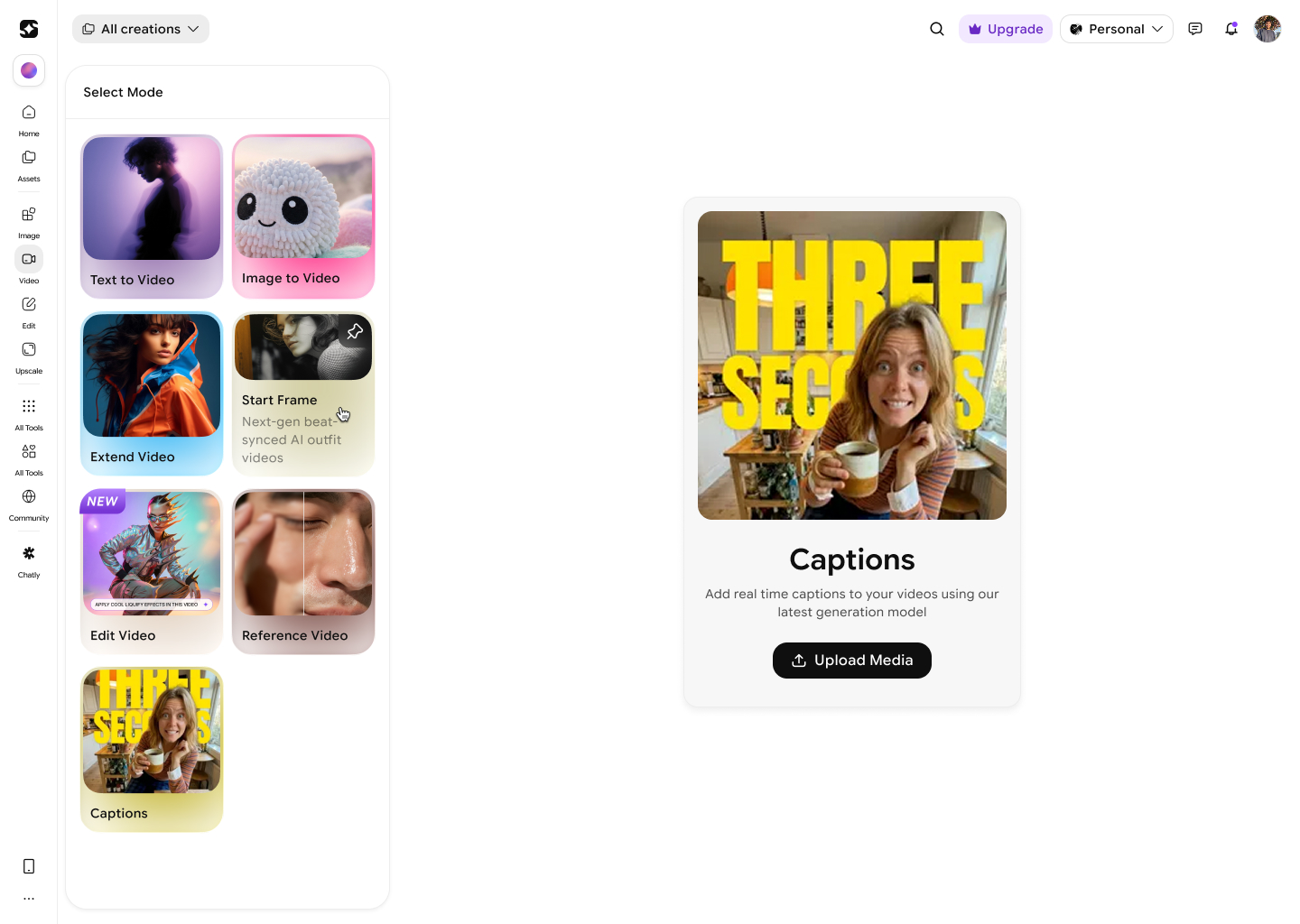
ImagineArt Captions
An auto-captioning utility that became the highest-intent front door into the video suite.
Consumer AI
Earn the discount. Don't just take it.


Day 1
Streak reward

100 credits added!
Daily credits added on top of your existing balance


40% OFF
01/The problem
ImagineArt gives free users 100 credits a day. People used them and left. Very few paid. A daily discount ran at the same time, and nobody noticed it, because an offer that is always there stops feeling like an offer.
So we kept the same discount and made users earn it. Come back four days in a row and the discount unlocks.
02/The decision
The length mattered most. Three days was too short: anyone ready to pay today could wait three days for a cheaper price, so we would be teaching people to delay. Seven days was too long: a week is a lot to ask for a habit that does not exist yet, and every extra day is another chance to quit. Four days takes real effort but fits inside a work week, and it gets past day two, where most streaks break.
Four days also works with how people think. A reward this week feels bigger than one next month. The closer the goal, the harder people push, so by day three finishing feels obvious. And once you are two days in, the streak feels like yours and you do not want to lose it. The same 100 credits become something to protect.
03/Design details
Orange feels warm and urgent. Red reads as a warning and yellow as caution, and orange is already ImagineArt's brand colour. The flame needed no debate: Snapchat and Duolingo taught everyone what it means. On day four the flame becomes a gold gift box, so you can see you have arrived.
Three rules keep it fair. Streaks reset at the user's local midnight, so a user in Karachi and one in San Francisco each get a full day. The streak follows the account, not the device, so it carries over from laptop to phone. And logging in twice in one day counts once.
04/Outcome
Live for all free users on the ImagineArt home. Three numbers will tell us if it worked: how many day-one users come back on day two, how many of those reach day four and claim the reward, and whether streak users go on to pay more than a control group over thirty days.
05/What's next
Handle a broken streak. Right now, miss a day and you start again at day one. A discount for broken streaks would undo the point, since the reward has to be earned. A streak freeze is the fair middle: one free freeze a month, the way Duolingo does it.
Test the length. Three days against four. The case for four is strong, but a test beats an argument.
Design what comes after day four. Today the loop ends there. Finishers should move toward a bigger reward at day fourteen or thirty.